


The Odyssey (2026)
The Odyssey falls short of greatness, but its ambition dwarfs almost everything modern blockbuster cinema has to offer right now.
Note: This review was originally posted on Taste of Cinema, and can be viewed here.
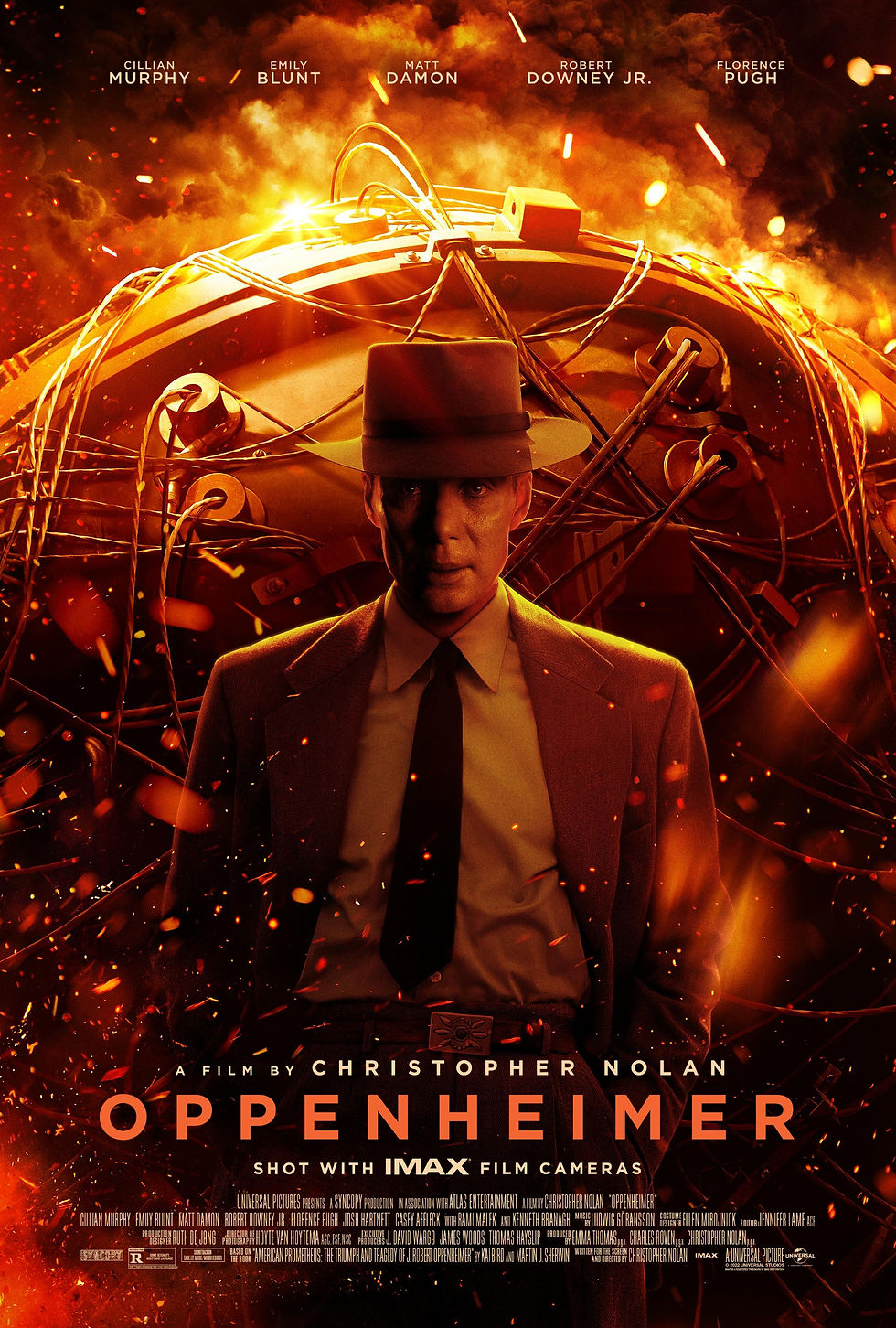
Event cinema returns to our screens, or strictly speaking, our IMAX screens if you witness The Odyssey in the way that Christopher Nolan intends. The last time Nolan blasted onto our screens was back in 2023 with Oppenheimer, a film that became a cultural phenomenon as part of the ‘Barbenheimer’ double bill, itself amassing nearly $1 billion worldwide while Greta Gerwig’s counterpart took in almost $1.5 billion.
It would be very interesting to see what Oppenheimer would have made had Barbie not been part of the cinematic landscape at the time, and perhaps the box-office takings for The Odyssey will offer a clue. Unless, of course, a cultural event involving Nolan’s latest and the new Minions movies suddenly appeals to the masses overnight. Either way, The Odyssey is going to dominate the box office for the foreseeable future.
It’s been over seventy years since Hollywood last adapted Homer’s “Odyssey” for the big screen (although 2024’s The Return starring Ralph Fiennes is worth a mention despite its low-key release) and one struggles to think of a director with the ambition, skill, and studio backing to take on the epic tale in a worthy way. But of course, Nolan would be one of them, as well as perhaps Denis Villeneuve; a man currently busy with the job of plotting the next Bond adventure, having just completed work on Dune Part III.
Nolan himself has been almost tirelessly linked with the Bond franchise, but one might argue that we’ve already had his own version of such a film with 2020’s Tenet, a film that was released to a post-COVID world, struggling to come to terms with just what exactly was going on in their own lives, let alone Nolan’s messy palindromic tale.
And The Odyssey is released to a planet in which people allow themselves to have their opinions dictated to them, or jump on the bandwagon of the last opinion they heard. I flag this up because The Odyssey has had quite a backlash before its release, when casting news dropped some time ago.
To claim that virtue signalling and woke agenda doesn’t exist in the cinema is to quite ignorantly dismiss something that undoubtedly occurs, and some high-profile critics- in my opinion- have fallen foul of desperately not trying to offend anyone in their own reviews of various films over the last few years. But it’s just as important to look at the other side too, with pure hatred spouted by people who crowbar issues into such debates when no such thing exists. Both sides can, and have, been damaging. The main crimes of Nolan, it seems, are having cast Lupito Nyong’o as Helen of Troy and Elliot Page as Sinon. Initially it was rumoured Page was playing Achilles, something that greatly upset people, but it is ultimately a moot point, having turned out to be false. And as for Nyong’o, one of the finest actresses working today, it seems churlish to claim that a black woman can’t possibly play a mythical figure.
Whatever your thoughts with regard to these perceived issues, they’re not enough to pass judgement on the entire film as a result. The Odyssey is a sweeping swords-and-sandals epic; the scale of which is sometimes difficult to comprehend and one that reinvents Homer’s legend in ways not seen before on screen. There’s a lot going on in the first hour or so, and there’s a little too much thrown at the wall. Nolan loves to provide us with separate narrative threads and timelines and has successfully done so before with much of his work, but The Odyssey drags as it tries to get everything into place so the mechanical structure of the film can run more smoothly as we enter the middle section of a film which is just shy of three hours.
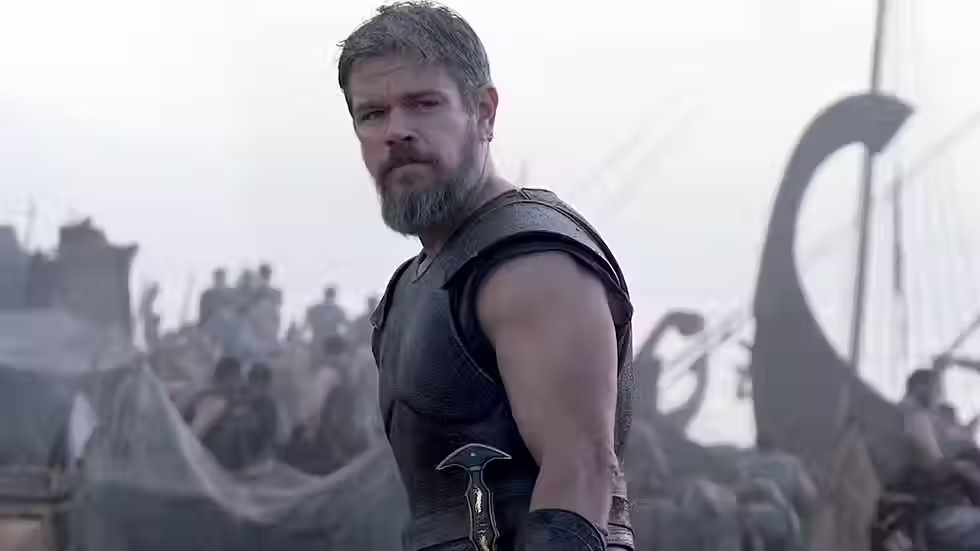
Matt Damon is excellent as King Odysseus, who, after the fall of Troy, begins the long journey home to Ithaca, told in various flashbacks and across different time periods. His quest lasts years and provides the thrust of everything that unfurls, as he yearns to reunite with his wife Penelope (a superb Anne Hathaway) and son Telemachus (Tom Holland). In Odysseus’s absence, Penelope is pressured to take a new husband with no shortage of suitors in Ithaca, chief of whom is Robert Pattinson’s Antinous. Pattinson is sensational, his snake-like and cowardly demeanour presenting us with an oily presence in the kingdom of Ithaca and a constant problem for Penelope and Telemachus.
The film slowly explores Odysseus’s guilt and shame over the Trojan war, and some have claimed the heart and soul of the film belongs to Page’s Sinon, whom Odysseus deceived and left as a blood sacrifice by the side of the daunting image of the Trojan horse, half buried in the sand of the beach, invoking the Statue of Liberty in Planet of the Apes (1968). But really this is all about Odysseus' unending shame as he begins to realise the futility of the war, the consequences of which are catastrophic. The taking of Troy is led by Benny Safdie’s Greek king Agamemnon, who is killed when he returns home; and as Odysseus and his men experience hunger, loss, disorientation and disaster on their struggle home, it becomes clear that the Gods have their own ideas of how the war’s aftermath plays out.
Their treacherous journey home consists of some truly memorable sequences. A cave meeting with the Cyclops is astonishing, and arguably where the film picks up the baton of urgency, which until this point was somewhat lacking. From here there’s a meeting with Samantha Morton’s Circe, a performance that, although slight, nearly steals the film from everyone around her as she taunts, teases and traps the crew. And we visit the underworld as Odysseus must converse with the dead, in a sequence that is as eerie as it is impressive. Some of the visuals in The Odyssey are jaw-dropping, and we’re lucky enough to witness even more through the eyes of Telemachus as he sets off on his own voyage to find evidence of his father’s whereabouts or existence, in a bid to save his mother from having to take another husband.
The performances across the board are terrific; even Tom Holland, who some have found fault with here, for my money does a very good job. Zendaya, Charlize Theron, and John Leguizamo all provide sterling work amongst many others; indeed, the cast list is seemingly endless. It’s a shame that Lupito Nyong’o only briefly appears, albeit in dual roles as Helen and her twin sister Clytemnestra. There’s a lot going on, even by Nolan’s standards, and he does an admirable job of trying to tie everything together. The last hour or so is pure cinema, building and building to a conclusion amplified and beautifully accompanied by the pulsing Ludwig Göransson score, which is constant throughout, the same way his work on Oppenheimer was.
We saw the fall of Troy depicted on screen by Wolfgang Peterson over twenty years ago, a film that starred Brad Pitt as Achilles and Orlando Bloom as Paris. But Troy (2004) is about as far as you could possibly get from The Odyssey, despite the similar subject matter. The sacking of Troy, which we see in stages of flashback, is breathtaking, and often a tough watch. There’s no Orlando Bloom prancing about like a berk, as he did in both Troy and Kingdom of Heaven (2005). Like Peterson, Nolan takes liberties with his source material, adjusting and omitting from literary sources, but whereas Troy did away with Gods entirely, Nolan gives us appearances from Gods and humans entangled in Greek mythology. You’re also reminded of Martin Scorsese’s The Last Temptation of Christ (1988), and The Odyssey also invokes Ridley Scott’s Gladiator (2000), an inevitable comparison that actually serves Scott’s Oscar-winning film rather well. At a mere two and a half hours, Gladiator doesn’t outstay its welcome, but there’s no doubt The Odyssey could shed twenty-five minutes of its run time.
But by the same token, it would take a brave editor to work out just where to chop and change here. There are bits and pieces of The Odyssey that plod, there’s no doubt about it, and this isn’t the masterpiece that many have claimed. However, you’re so quickly swept up in whatever comes next that it’s easy to forget these niggles while it’s unfolding in front of you, and the final hour will have you glued to the screen as it snowballs to its hugely satisfying finale.
Odysseus’s journey home is a horrifying, painful, and traumatic experience to say the least. It might even be argued that he himself wants it to be so and expects it as some form of self-torture; a punishment for his actions in the war which have made him feel unworthy of happiness. Damon captures all of this and more in what is a truly fantastic, understated and world-weary performance. Thankfully, as an audience, our journey through Nolan’s Odyssey is far less arduous than Odysseus’s plight. Quite the opposite in fact. This is cinema in its purest form, and we’re lucky to have someone as brilliant as Christopher Nolan to bring it to us. It will take a few more viewings to form a more fully rounded opinion, like all his work, and there is no getting around the fact that The Odyssey makes false steps. This is ambition on a scale to match Denis Villeneuve’s Dune adaptations; and yet just like those cinematic voyages to Arrakis, Nolan’s Odyssey falls just short of greatness. ★★★★ 7.9/10



Comments