


Fault (2026)
Strongest when it leaves the court behind, Misha Calvert’s drama exposes the off-court horrors at its core.
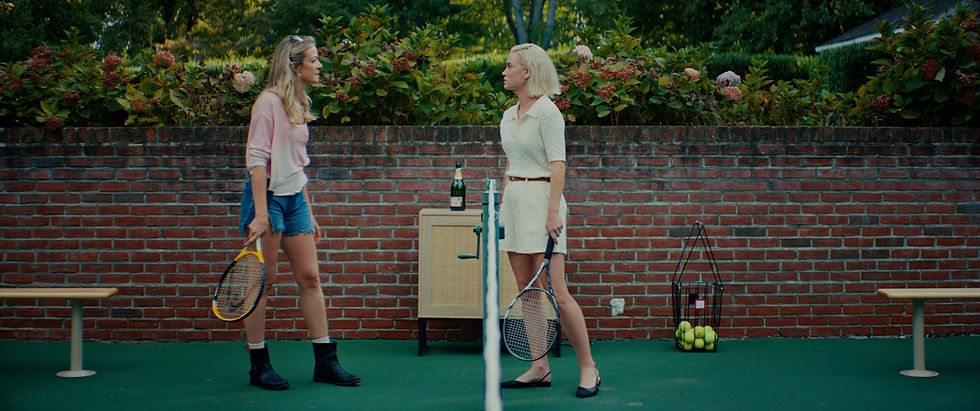
Steph is an elite tennis player training for the upcoming US Open on her own private tennis court when her estranged sister Gigi arrives, and in the space of an afternoon, begins to unravel Steph's tightly wound life.
Tennis on film has proven a tricky thing to master, and although films like Borg vs. McEnroe (2017) have managed to portray the sport itself well, there are others like Challengers (2024) or Wimbledon (2004) where the cinematic sporting action is execrable.
Misha Calvert's short film Fault is an interesting case. The immediate touchpoint is Leonardo Van Dijl's superb 2024 film Julie Keeps Quiet, a terrific drama about a teenage tennis prodigy whose coach is sacked over allegations of abuse. Whereas that film was very much balanced tennis with a psychological narrative, Fault uses tennis merely as a backdrop.
If you're a tennis fan, this can be off-putting as we witness the opening scenes featuring some fairly unconvincing tennis strokes while Steph (a terrific Coco Jourdana) berates her own mistakes while security cameras surrounding the court look menacingly on. It feels like they're there to spy on her rather than for any sort of security, and so it proves. Steph's sister, Gigi, turns up for lunch and is instantly on the offensive, criticising Steph's enormous house, lifestyle, and tennis strokes, the latter while swigging from a bottle of champagne.
But with every verbal assault Gigi throws her sister's way, we become more and more aware of Steph's insecurity and the way she is tightly wound, as well as begin to understand Gigi's own issues. They share many demons that stem from the same person. This isn't a film about tennis; it's about trauma. In the case of Fault, Calvert cleverly weaves a shared female narrative from opposite ends of appalling abuse, culminating in a finale that unleashes everything on the audience and hammers home the sense of damage such journeys can bring, yet also offers a satisfying sense of release in its final scenes.
★★★½
7.7/10


Comments